An Occasional Descent on the Way of the Forty

There was, it is true, always the possibility of being raided on the Arba’in Road by the Kababish, Bedayat, or other tribes, but the country traversed was far too barren to support a permanent population, and with a little luck one would avoid their occasional descents.

-Darb El Arba’in: The Forty Days’ Road, W.B.K.Shaw, Sudan Notes and Records, Part 1, 1929

I don’t think that Kababish raiders were still “descending” on daboukas when I made my trips sixty years after Shaw’s warning. The French and Italian North African colonial-era word for bedouin raid, razzia, comes from the Algerian Arabic ghaziyya, whose triliteral root has the strange cognate ghaaziya, a dancer, which implies more accurately how a razzia typically unfolded. A booty raid was less doing violence to enemies and more facing off against acquaintances in a choreographed if chaotic square dance, with less singing and calling and more hollering and whooping…girls in, men out…girls curtsy, men sashay…pass thru and all go home…with few if any ever getting hurt.

My only experience with desert thievery was with Billa Ali al-Qrain, more pickpocket than mugger, whose modus operandi was to ride out of the Wadi al Milk at night when a dabouka was passing, cut off a straggler from the back of the herd, then the next morning come into camp leading the “stray” to demand a customary finder’s fee.

KhairAllah knew Billa Ali from previous encounters but he also knew it was not worth arguing, for Billa was armed with an Enfield and the drovers only knives. Billa’s con was more like a mafioso’s pizzo, literally his bird beak or protection money, meaning, so what if he wet his beak from time to time off a passing dabouka. Better to pay up than to see if his Enfield was loaded. Better to invite him to eat with us than to deny him our hospitality. If we did not, how would we ever know the ghaaziya from the ghaziyya?

The other Soudan, which some mistake for the true

The real Soudan, known to the statesman and the explorer, lies far to the south- moist, undulating, and exuberant. But there is another Soudan, which some mistake for the true, whose solitudes oppress the Nile from the Egyptian frontier to Omdurman. Destitute of wealth or future, it is rich in history. The names of its squalid villages are familiar to distant and enlightened peoples. The barrenness of its scenery has been drawn by skillful pen and pencil. Its ample deserts have tasted the blood of brave men. Its hot, black rocks have witnessed famous tragedies. It is the scene of the war.

-The River War, Winston Churchill

“Moist, undulating, and exuberant”…Sir Winston certainly seemed seduced by Sudan’s lower parts, but it was its upper half- deserts hot, barren, and oppressive- that wanted to kick him out of bed. Once at the Khalifa Museum in Omdurman, I came across a student video team conducting interviews with visitors, asking them the significance of the year 1898, when Great Britain established its sixty year long Sudanese imperium. They were surprised to find a foreigner with a different kind of answer.

I told them about the US invasion of the Philippines that same year, the beginning of American colonialism and the first of its many long wars against foreign nationalism. The students didn’t know any of this, I spoke to them in mixed Arabic and English but I got the idea across….that the year 1898 was a turning point both for the United States in the Philippines and for the United Kingdom in the Sudan. The Battle of Manila Bay took place only four months before the Battle of Omdurman.

Sir Winston wrote The River War in 1899, with emotions still high for taking revenge for the death of Gordon. That same year Mark Twain wrote that the American invasion of the Philippines was a “quagmire”- sound familar?- and said American soldiers- “uniformed assassins” he called them- were firing “the Golden Rule into those people…piling glory upon glory” . I don’t know if what I told the student journalists made it onto Sudanese television.

in a language not Arabic

The only language of loss left in the world is Arabic-/These words were said to me in a language not Arabic.//…O, this is the madness of the desert, his crazy Arabic//…You’ll all pass between the fleeting words of Arabic.//…Well, it’s all now come true, as it was said in the Arabic.

-Ghazal, Agha Shahid Ali, where Arabic is the poem’s radif, refrain word

The very first time, I was not prepared to spend forty days speaking to the drovers in a language not Arabic, or rather not the Arabic I had been trying to learn for the past four years. After that intensive year in Cairo I barely spoke Egyptian Arabic well enough to follow coffee house conversations, even when sitting across the table from my interlocutors and could watch their lips move.

The Arabic of tribal Kordofan is different from the Arabic of Khartoum. I once bought a colonial-era English-Sudanese Arabic primer, with practice sentences such as “Please direct me to the British Embassy”, but I didn’t see much use for it in the Wadi al-Milk, so I gave it away to some Sudanese-American girls who had left Sudan when young and in America were forgetting their mother tongue. They came from an educated family in El Obeid, so I don’t know if their mother’s spoken Arabic was more of Kordofan or more of Khartoum. But I gradually learned to get my meaning across to the drovers, to KhairAllah better than the others, to the point where they would only sometimes have to call him in to translate for me…another one of his unpaid jobs on the Darb al-Arba’een.

When I see him these days, KhairAllah and I speak less in full Arabic than in only the few prompt words that recall our eighty days together on the trail. Billa Ali, the kindly camel thief we invited to dinner…Masood abu Dood, the drover with the funny name, Father of Worms…Al-Khuwei, the well flats outside al-Nahud where he and I first met…Bilal waqa’a, Bilal fell, off his camel drunk with millet beer. That is a language not really Arabic, it is a language of words not even spoken, but rather of people and places and events remembered, thirty five years later and still good for a chuckle or two.

The Nile as Vagabond, as Bedu

I must without further delay withdraw as vociferously as possible the objection I made to your word vagabond as applied to the Nile: "Que le Nil vagabond roule sur ses rivages”. There is no designation more just, more precise, and at the same time more all embracing. It is a crazy, magnificent river, more like an ocean than anything else.

-Gustave Flaubert, March 13, 1850, Aswan, Egypt, letter to Louis —

I thought we were the only vagabonds when we finally arrived at the Nile after 20 days in the desert, sometimes wandering and sometimes circling in search of pasture, then later always moving straight and fast to our mid-point rendezvous with its Nubian rivage. Camel drovers from Kordofan are bedu, the ones who wander. Nile riversiders are farmers and traders, filling and emptying their sedentary lives from sacks of peanut and millet scoop by scoop.

When we arrived in Dongola, I tailed KhairAllah walking through the souq and felt all eyes there falling upon him, for the first time not upon me. He was the curiosity, not me, dressed as a desert man washed up in a river city. The whip dangling from his hand gave him away. I never did ask why in town he’d need a sout, a whip- a punning counterfoil to its Arabic homophone sawt, a voice. Sawt al-Sout.

No Donglawi would call the Nile a vagabond. And neither would a Kabbashi, or a Kawahli, or a Hamari. They were the only wanderers I knew in Sudan. Maybe not true bedu, true nomads- see Omar Sharif’s meme from Lawrence of Arabia when, both of them very parched, Peter O’Toole offers him a sip of water and he declines with the words, “I am bedu” (Steve and I always had a big laugh about that, especially when we were three days past the last well and feeling dry)- but certainly more rootless than those Nubian farmers and stallkeepers watching as daboukas from Dar al Kababish passed by.

from Bir Aata to Jebel Zuruq

Bint al Kalb, Daughter of the Dog; Jebel al Arusa, Mountain of the Bride; Wadi al Aris, Arroyo of the Groom; Um Bint Bahr, Mother of the Daughter of the Sea; Abu Tulayb, Father of the Little Student; Wad Abu Nahl, Son of the Father of Bees.

-Gazetteer of Sudan, Names Approved by the United States Board of Geographic Names, Second Edition, March 1989

What’s with those Sudanese toponyms? I’ve lately been amusing myself by scanning the 28,000 names of villages, towns, hillocks, sand sheets, well flats, and other land features listed alphabetically in the 600 page Gazetteer of Sudan published by the US Government Defense Mapping Agency, for what practical purpose I have no clue.

In 1984 I took a cross-country bus from Umdurman to Kordofan and at the midway point we stopped to rest in some flyspeck of a village. I asked, Where are we? They answered, Um Dubbaan, Mother of Flies. Why was I not surprised? Later I learned it had been originally named Um Dhu’ al-Bayyan, Mother of Him with Clarity, but its townspeople found that to be too much a mouthful and said it would be easier to live with whatever teasing came from people just passing through, happy at least they didn’t live in the next village on, Um Dudah, Mother of the Worm.

Wouldn’t you consider yourself lucky to wake up in the village of Kammil Nomak, Finish Your Sleeping, after having gone to bed the night before in Al-Fateesa, the Corpse?

I never did make it to Adhan al-Humaar, Donkey Ear, in fact I can’t find it in the Gazetteer but I’ve heard much from those who know it well. And now I’ve learned that its name was changed at the request of government officials on temporary duty there who were too embarrassed to tell relatives back home where to post them letters. Why, I wonder, didn’t they just make the best of it like Texans do in Muleshoe- just up the Panhandle from the town of Sudan- where they’ve built themselves a celebratory arch to farriery 22 feet high.

Because some didn’t like living in Qanainita- the diminutive form of the noun meaning ass (as in derriere, not donkey)- they changed it to Mubraika, Little Blessed One, the diminutive form of the word mabrouk, just as the capital of Kordofan is another diminutive, El Obeid, The Little White One, said to refer to the little white ass (donkey, not derriere) that the town’s founder rode in on.

Worsening Circumstances on the trail, or the ephemera of a caravan trek

zha’n, trek (esp. of a caravan); zha’eena, camel-borne sedan chair of a woman, a woman in such a chair; zhaa’in, ephemeral, transient

-Wehr’s Dictionary, cognates of the verbal root zha’ana, to move away, to depart

Many of Wehr’s words will never make it into the everyday speech of the Kababish, especially those beginning with the letter zhaa’, the rarest of letters in Arabic’s alphabet (which also happens to start the word zharf, pl. zhuruf, envelope, or circumstance, which was part of my favorite expression on the trail, hasab al-zhuruf, depending on circumstances, used by khawajas like me when things looked their worst and the drovers looking on the bright side would otherwise say Insha’Allah.)

Does that make it true therefore that the trek of our dabouka was somehow a transient, an ephemeral thing? I don’t have an answer for that, but maybe Badawi and Hinds’ Dictionary of Egyptian Arabic does, which has the verb zharrata, to break wind or to worsen, in which case you could say that on more than one occasion on the trail, zharratat al-zhuruf… meaning either that our circumstances worsened or that the envelope broke wind, presumably the opposite of what you hope to read when opening a billet doux postmarked from the Darb al-Arba’een.

download.png

Wad Hamid, Khileewa, and Karmakol-Three Places I have been, all at the same time

Were you to come to our village as a tourist, my son, it is likely that you would not stay long…I know, my son, that you hate dark streets and like to see electric light shining out into the night. I know too that you are not enamored of walking and that riding donkeys gives you a bruise on your back side.

-The Doum Tree of Wad Hamid, Tayeb Salih

The man from Khileewa may have said something like that to me on Day 21, the day we arrived at the Nile’s bank at this watering place where the trail first touches the river. His name was Al-Fadil and he was curious why two Americans rode with a dabouka up from Kordofan. I tried to explain, and then he took David and me to the school where we gave his students a lesson about American Presidents, that Reagan was a movie actor and Carter was a peanut farmer like many of their fathers.

Khileewa was a lot like, and very near, the farming hamlet of Karmakol where in 1929 Tayeb Salih was born and where a little farther upstream to the south the Nile makes its big lazy S turn back to the north toward the Fourth Cataract. Wad Hamid was Salih’s name for Karmakol in all his stories about the semi-magical life he remembered as a child from rural Nubia, a bit like Brigadoon or the Hobbit shire.

No, I explained to Al-Fadil, and as I had to explain again on Day 32 to Al-Hajj Hassan Sayyid in an even more remote village in Dal Cataract who had also asked me why we rode with KhairAllah’s dabouka, I did not hate dark streets without electric lights at night, nor did I mind walking as far as Cairo on my own two legs, but yes, I did prefer to ride camels because they bruised my back side less than did riding donkeys.

Al-Fadil and Al-Hajj Hassan knew Tayeb Salih’s name because he was famous worldwide and his Doum Tree of Wad Hamid was his first published story, from 1960, twenty five years ago. In it Salih wrote about how Khartoum’s plan to build a passenger ferry station beside Wad Hamid’s doum tree would have forever blotted its value as a place free from the passage of time and the hand of man. Not a place for whistle stops, not a place for ticket taking, so the villagers said no, they would rather walk to the ferry dock in the next village. Al-Fadil and the Hajj knew that, and when I got home and reread Tayeb Salih, so did I.

Does KhairAllah consider his tea water uncontaminated?

The Kababish are not a homogeneous tribe…but at the same time the several elements of which the tribe is compounded, if considered as a whole, will be found to be less contaminated with non-Arab blood than are those of any other Sudan-Arab tribe to which a single name is now applied.

-The Tribes of Northern and Central Kordofan, Harold MacMichael

I never even thought to ask KhairAllah that question, whether he felt there was non-Arab blood in his veins. And if so, would he have even cared.

But I do know this, if any linguists tried to do among the Kababish what they once did among the deep desert tribes of the Arabian Penninsula, to go among them to record their choice and pronounciation of key words, such as which broken plurals they chose for which singular nouns in order to uncover some supposedly uncontaminated Arabic language, then I pity those linguists, and shudder to imagine what supposedly pure words they might bring back from their interviews in the well flats of Hamrat al-Shaikh.

When I came off the trail after forty days and spoke to an urban Egyptian, hoping to impress him with my easy fluency, he gave me a big laugh. “You sound like a hillbilly,” he said. “A smooth talking hillbilly. Let’s start at the beginning, shall we? Water, it’s mayya, not muyya.” For KhairAllah, everything that was good was saafi, pure, uncontaminated, as in muyya saafi, meaning no sand and no sulphur in his tea water.

It was a bit embarrassing to get the desert’s most essential word wrong, a bit like when I’d first arrived in Egypt after studying Modern Standard Arabic for three years in a US classroom, and couldn’t even get right how to pronounce the country I was in. Egyptians call it Masr, not Misr. I was corrected on my first day. But that muyya from Dar al-Kababish tasted just fine.

Dar al-kababish, "our own country"

My guides, Zeki ibn Belal and Hamed ibn Hussein, both belong to the Kababish tribe. The Gilif mountain is their home country and they knew every path. We unsaddled our camels… “We have come into our own country and she will protect her son,” said Hamed. “Have no fear, as long as we live you need have no misgiving.”

-Fire and Sword in the Sudan, Rudolf Carl von Slatin, the Mahdi’s prisoner who identified for him Gordon’s severed head

KhairAllah ibn Khair Al-Sayyid, The Goodness of God, Son of the Goodness of the Master, was my guide if you want to call him that. But he was much more and much less. Once he got lost amid the criss-crossing trails of the Delgo Reach of the Nile- where it turns sharply east, then north, then west, then north again, leaving an odd notch on the western bank where we travelled- when he was that day’s dabouka leader, and Muhammad al-Humri gave him endless grief for being a terrible guide, until he climbed the highest sand dune and saw finally that we were close to the river after all. That day he was less than a guide. But most days he was more, much more.

The British may have called him a dragoman, from the Arabic tarjumaan, translator, a kind of crafty Cairene fixer in the old days for Europeans on a deluxe Pyramid and Sphinx tour who dickered for you with the clamoring donkey boys and dancing girls outside the Shepheards Hotel. Others would call him a murshid, a guide to Al-Rushd, the Right Way, but that is making it a bit too theological for KhairAllah’s taste. His idea of following the Right Way was simply “to keep the North Star on the left cheek”- north northeast from Dar al-Kababish all the way to Cairo.

He called himself khabeer al-sikka, Expert of the Route. That he was, and when people met him for the first time and heard him called that by others, they followed wherever he led through his desert home country knowing that “she will protect her son”.

What's not to like about the hump

If a camel saw its own hump it would fall down and break its neck.

If a camel saw its own hump it would rip it off.

-Egyptian proverbs

These proverbs fall under the category of “Hypocrisy and False Appearances” in Aquilina’s dictionary. I don’t see why- as if the very thing that gives a camel its distinctive look, the “big swinging…” equivalent of a peacock’s tail or lion’s mane, should also be its cause of shame. A swollen sanaam is as desirable atop a bull camel as a swollen zibr is beneath a bull. It’s what a camel dealer first squeezes when he’s eyeing a purchase in the market. Humps don’t lie even after having been sat upon for forty days on the trail. You can trim its hair or dye it henna red, but if a hump is dried out and lists sideways, there is no fooling KhairAllah. Al-hudba baayza, the hump is no good, he will say. Best to ride another.

nowhere to walk on water in dar al-kababish

“Jesus could walk on water. Muhammad could only ride a camel.”

-Acts of Faith, Philip Caputo, words spoken by an American missionary in Sudan

I had no religious conversations with the drovers while with them and the camels. They may have known Christian missionaries at the Comboni Brothers Catholic high school in El Obeid where some of my wealthier Sudanese friends studied, but the drovers were unlikely to know much about Christianity, and I was reluctant to get into such things as the Eucharist or the Trinity which would have sounded too much like cannibalism and polytheism in my shaky Arabic.

Best to keep to such basic Islamic interjections as Insha’Allah (if talking about what might happen), Masha’Allah (if talking about what is happening), and Alhamdulillah (if talking about what has already happened)- If God has willed it (note the past tense, for everything, everything, is foreordained), What God has willed, and Praise be to God (for having willed it). Future, present, and past- that just about covers it all.

The late Anglican missionary and Bishop of Jerusalem Kenneth Cragg saw parallels between Islam and Christianity that he found helpful for mutual understanding when talking to Muslims. The Prophet Muhammad is like John the Baptist, the herald of God’s arrival; Jesus is like the Quran, the manifestation of God on Earth; Christmas is like Ramadan, the exact time when God was made manifest; and the memorization of the Quran is like the taking of holy communion, the human ingestion of God. That’s stretching it too far, an Italian Catholic missionary in Syria once told me. He later disappeared in the war and is presumed dead, probably killed by fanatical Islamists.

I did learn one helpful word in Arabic concerning Islamic theology, Ikhwaniyya, brotherhood, which came in handy once when KhairAllah scolded Adam Hamid for suddenly refusing to share the common food dish with me and David because we were Christians. After you have ridden beside them, and slept beside them, and shared their water, and shared their jokes…now you decide they are not worthy of eating with you? he asked Adam before beating him with a camel whip. Long live ikhwaniyya, I thought. The Comboni Brothers would have agreed.

Ahl al-ba'eer or Ahl al-Ba'r

The camel…without it the desert could not be conceived of as a habitable place. The camel is the nomad’s nourisher, his vehicle of transportation, and his medium of exchange. The dowry of the bride, the price of blood, the profit of gambling, the wealth of a sheikh, are all computed in terms of camels. It is the Bedouin’s constant companion, his alter ego, his foster parent. The Bedouins of our day take delight in referring to themselves as ahl al-ba’eer, the people of the camel.

-History of the Arabs, Philip Hitti, 1937

It was impossible to study Arabic at Princeton without hearing the name Philip Hitti, who taught there for 30 years and left a deep fingerprint on the Department of Near Eastern Studies when he retired in 1954. Twenty years later, his History of the Arabs- now in its tenth edition- was still considered essential reading despite being an overly fusty epic account.

I just paged through Hitti’s History again and was happy to learn from it a word new to me for camel, ba’eer, a singular noun with more broken plurals than I’ve ever seen a standard form to give- ab’ira, bu’raan, abaa’ir, and ba’aareen. But what I most like is the word Wehr shows as its cognate, ba’r- camel droppings, which brings to mind another fusty epic from my time on the Way of the Forty, but I will leave that off until after you’ve had your dinner.

Publius Ovidius Naso in Tomis, Luwees in Wad Doum

so I write, and read, for myself (there’s no other option)-/am my own judge: my work is safe with me./ Yet I’ve often asked myself what’s the point of such labor-/ will the Sarmatians or Getae read my work?

-Tristia, IV, 1

…I blush/ to admit it, I’ve even composed in the Getic language,/ bending barbarian patois to our verse:/ among the uncultured natives I’m getting a reputation/ as a poet. Congratulate me. I’ve made a hit.

-Black Sea Letters, IV, 13

Why did Ovid doubt that Scythians and Goths would read his work? In one of his letters he says that his tribute to Caesar was a hit in the Getic language so he must have been more than proficient in it, and he apparently thought himself equally so in Sarmatian. Unwritten dialects spoken in out of the way places are always worth learning, no, maybe not in order to write original verse, but certainly to transcribe, translate, and maybe declaim someone else’s…such as the poem the drover Saeed abd al-Faraj recited at our fire one night.

Her waist isn't flabby but her hips are wide,

Yet just one hand can gird her buttocks riding high.

By the life of the Prophet! On a feast day!

Her gown shines brighter than the glow of dawn.

It had us all in stitches, Kababish and khawaja alike, when Saeed later let us in on his secret…the “her” in his poem was a naaqa, a camel mare, not a bint, a Kordofani maid.

Travel in a pre-motorized world

The ordinary person understands the camel, if in concept only, because it is an animal like himself.

The transition from camel to car is under way; it cannot be checked. But the passing of a romantic tradition is certainly sad. We can but console ourselves with the thought that it has all happened before- that Roman travellers must have felt the same sense of sacrilege when the hideous camel was introduced to penetrate the sanctity of mysterious desert fastnesses, destroying all the romance of donkey journeys.

-Libyan Sands: Travel in a Dead World, R.A. Bagnold

We never thought much about riding in a vehicle when we were out there. Once we had left behind Hamrat al-Shaikh there were none to be had and none to be heard even when their engine noise would have carried to us far over the desert. Petrol was expensive and the blond-haired Syrian lorry driver Gaby who drove the route El-Obeid to Nahud- David and I rode with him overnight that way in 1984- would have had no reason to go off piste to the north. No cargo up there, and no passengers, so no profit.

The export route to Egypt now ends at the Argeen border station and the camels are loaded onto trucks and sent north from there. Maybe now they are loaded in Dongola and shipped to the border because the road on the Nile’s west side has been paved. If so, you can cut the Way of the Forty in half, Darb al-’Ishreen, you lose a syllable and gain three weeks to market. Twenty fewer days of tea making, aseeda eating, and sleeping rough. It doesn’t mean you’re a romantic to say that’s a stiff price to pay if you are aiming to get away from everything but that.

I don’t think the Romans truly regretted to see the sun set on their trans-Saharan donkey journeys. From camel back the view is better, the horizon seems farther away and the gait is smoother. Riding a donkey is the same as riding in the cab of a Bedford whose suspension is so tight you feel every bump and see nothing but straight ahead through a dirty windshield. Jamal, n. camel; jameel, adj. beautiful. Humaar, n. donkey; humar, n. asphalt.

Bagnold needs a push

Bagnold needs a push

Abnaa' al-Sahraa'

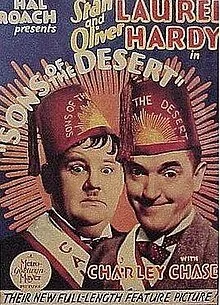
OLIVER: (speaking to Stanley) Do you have to ask your wife everything? I never realized that such a deplorable condition existed in your home…I go places and do things and then tell my wife…OLIVER’S WIFE: If you think you’re gallivanting off…over my dead body! I’ll put you in jail first. (speaking to Stanley) And you too! With the rest of the Sons of the Desert, Oh, the Sons of the Desert! Ooohh!

-The Sons of the Desert, 1931, in which Laurel and Hardy sneak off to the convention of their fraternal order Sons of the Desert

I thought I should buy a television set for the house while I was away. I’d be far from home and out of contact. Maybe she’d be lonely and need some distraction. So I bought a big Sony and put it on a stool in the living room. I was going to the desert and “may be some time”, as Capt. Oates said about going into another desert before he froze to death out there. But when I got back two months later, she said she’d never watched the television, not even turned it on. It was still unplugged. So I told her a few stories, about how over those forty days on the trail David and I had become Abnaa’ al-sahraa’, Sons of the Sahara. But in America, if it wasn’t on tv, it didn’t count. That’s why I had to go again and make a movie.

220px-L&H_Sons_of_the_Desert_1933.jpg

Khairallah Crosses the Desert and Enters Binban

On a February day in the year A.D. 638 the Caliph Omar entered Jerusalem, riding upon a white camel. He was dressed in worn, filthy robes, and the army that followed him was rough and unkempt.

-A History of the Crusades, Vol. 1, Chapter 1, The Abomination of Desolation, Steven Runciman

In his fifteen hundred page opus, Runciman only once wrote about a white camel, the kind KhairAllah rode into Binban on a February day of the year 1984 wearing a clean ‘aragi over a dirty sirwal and followed by his rough and unkempt men, except for the youngest drover Adam who had shaved his face clean the night before. For our ragtag group of Muslims and Christians, entering Binban was not quite like making pilgrimage to Mecca or conquering Jerusalem, but it did promise us a drink from the Nile which the Holy Cities could not.

Runciman shows great sympathy for Muslims and Byzantine Christians whom he considered victims of the Catholic Crusaders. His depiction of the Caliph Omar entering Jerusalem peacefully he contrasts with Count Raymond of Toulouse’s butchery and blood letting there five hundred years later. Unlike Raymond, we entered Binban not on a crusade but after crossing the Sahara.

Our word “crusade” comes from the stem word cross, as in crucifix and cruciform, which you also see in the French, Croisade, from croix, but even more clearly in Arabic.

Salib in classical Arabic means cross, from the verbal form salaba which Wehr gives as “to crucify someone, to make the sign of the cross, or to cross one’s arms over one’s chest”. He gives an adjectival form as huroub salibiyya, Crusades, literally “crosswise wars”- note that there is no capitalization of letters in Arabic orthography so thus it has less the religious connotation than George Bush gave it after 9/11.

I learned the Arabic verb for “to cross (a physical space)”, such as a desert or a river, as ‘abara, which also gives the word mi’bar, ferryboat, on which we and the camels crossed the Nile from Binban to the Daraw quarantine station. That was not a crusade either, just a short crossing, twenty minutes rather than forty days. By then Egyptians had taken charge of the camels, loading them onto rail cars to ship to Cairo, so we all stood by watching, crossing our arms over our chests and waiting for our next desert crossings. I waited four years for mine, KhairAllah less than four weeks for his.