Goodbye, If Allah has willed

This guy made forty days feel like forty years.

-KhairAllah Khair al-Sayyid, talking to himself, Cairo Camel Market, February 1984

It had been forty days sharing aseeda and trail dust, but once we got to Cairo it was almost as if it had never happened. Ma’a salaama, sa’ashufak in shaa’ Allah, Goodbye, I’ll see you again if Allah has willed it…all things that shall happen being what God has foreordained, so that phrase of wishing, desiring, hoping for what is God’s will is always spoken in the past tense. So I guess that He did. It’s getting close now to forty years that he, the Goodness of God, shook my hand in Cairo and I have seen him many times since then.

Photo ©David Melody

Photo ©David Melody

Your mother, the camel

There is a Homeric quality about the cowboy’s profanity and vulgarity that pleases rather than repulses.

-Introduction, Cowboy Songs and Other Frontier Ballads, John Lomax, 1910

Ummak, Ummak, Ummak! Your Mother, Your Mother, Your Mother!

-Abdullah, cursing a camel he is saddling, Voice of the Whip

A tribal bard, a teller of tales, a poet at the fire. Homer composed epic verse using the same epithets again and again…wine-dark sea, rosy-fingered dawn, white-armed women, god-like men, and “his mother, beauteous queen of heaven”. And your mother? Ask Abdullah when he’s in a better mood.

sand for the soul

Land of water for the body, Land of sand for the soul

Water is life, Milk is food

-Tuareg proverbs

Perhaps the Tuareg I met in Agadez could live without water if they had milk, but what mattered to us was that which we couldn’t stir but could stir us. Seligman’s lexicon of Sudanese Arabic gives the word for Sand Devil, a Whirlwind, as ‘Usaar, and Lane offers a secondary meaning in Classical Arabic, an Exhalation of Perfume. I will take both as one, a Stirring of the Sand, a Scent for the Soul.

Youpy youpy unhh unhh

Coma ti yi youpy, youpy ya youpy ya/Coma ti yi youpy ya

-Refrain verse in The Old Chisholm Trail, cowboy ballad collected by John Lomax

Unh unh unhh, Unh unh unhh, Unhh unh unh, Unhh unh unh, Unh unhh unh, Unh unhh unh

-Hamid’s ditty sung while rounding up camels, Voice of the Whip

The refrain verses in cowboy songs sound like something a drover might sing pushing cattle up the trail. No words needed. The same goes for camelman songs. The ones with lyrics of the kind Idris sang about a camel “sleek and tasty with an eye like a Seiko watch” are fine when you’re going straight and easy, but when you’re picking up strays or pushing them hard it makes sense to drop words and go with nonsense, punctuated with the voice of the whip.

Year of the goat

Herding [a camel] for a day makes you a goat for a year.

-Arab proverb on the backward nature of herdsmen, collected by J R Jewitt, Journal of the American Oriental Society, 1893

KhairAllah told me he had made hundreds of trips up the Darb, so it’s lucky that Muslims don’t believe in reincarnation. That would be too long avoiding the butcher knife. Karma…why not come back as a camel tick and get to Cairo the easy way?

tidying up dar al-kababish

It was to achieve bureaucratic tidiness that in 1933 Ali al-Tum [nazir, or paramount chief] was told his tribe “should be more under control”. It was “useless”, a new young District Commissioner reported, “to suppose that the Kababish could lead an isolated existence.”…It was decided as a matter of utmost importance that the Kababish be “brought within the fold”.

-Imperial Sudan:The Anglo-Egyptian Condominium, 1934-1956, M.W. Daly

A lot had happened to Dar al-Kababish in the fifty years between first being brought into the fold and my own two trips up the Darb. No longer so isolated…some of the drovers carried passports and they were heading to Africa’s largest city, paid for their work in the export trade in Sudanese pounds which although not tendered on foreign currency exchanges could buy whatever they wanted in Khan al-Khalili. And when they were finished with us on the trail they knew enough English to repeat what they often had heard us saying, things like More Water, or Bad Food, or No Sleep, words understood in the best hotels in London and Paris.

A fat and pursy kahli

[No Date] I have forgot to mention that before lunch that fat and pursy Kahli, Abdallah Ali Abu Sheikha of the Awlad Gadein (the man whose camp was accused of murdering several Hamar in 1931), came to see me and I sat under a tree with him.

[No Date] I spent part of the morning trying to sketch camels’ heads with poor success. I must have another shot at the full face pose which gives the maiden aunt effect.

March 1, 1932. Rode 6:17 to 9:06 when we reached Wadi al-Masirin. 169 minutes trotting, 275 minutes walking. Felt tired and slack and headachey. Read Hawawir files. After lunch tried drawing- a failure.

-On Trek in Kordofan: The Diaries of a British District Officer in Sudan, 1931-1933, C. A. E. Lea

Cyril Lea lived to be over ninety. I guess his twenty five years working outdoors in the Sudan Service proved to be good for his health, but trotting on a camel for 169 minutes a day must have been hell on his back. He didn’t seem to like Abdallah Ali of the Kawahla tribe and I didn’t like the Kahli drover Ahmad either, but he was in Bilal’s dabouka so we didn’t talk much. When we did, I saw he was the only one with teeth capped in silver and those that were not looked to be rotten. Durham University’s Sudan Archive has two boxes of Lea’s personal papers including 165 photographs. The file record doesn’t say if he left it any of his camel drawings.

No kafirs in foxholes

…the dreary void,/The leafless desert of the mind…

-Byron, The Giaour, A Fragment of a Turkish Tale

Giaour, a variant spelling of Gavur, is a Turkish word for infidel derived from the same root that generates the Arabic word Kafir, Denier of God, its metaphorical sense apparent in the verb Kafara, to Conceal, to Cover. Byron had just been to the Middle East before writing the poem and he presumably encountered Muslims who had never met a Christian. Maybe some of the drovers had never met or even seen a Christian or a Jew before saddling up with us, but if they had not they soon learned that in the desert when dawn fills night’s void, and just as in foxholes, there are no Kafirs.

camel carpaccio

Dustin Hoffman: Stupid ass camel! He’d rather sit there and die. Warren Beatty: You know, I kind of admire that.

-Ishtar, Hollywood’s biggest critical and box office flop, lost $40 million on a $71 million budget

We didn’t let the lame camel in our dabouka just sit there and die. We slaughtered it before its last breath so we could butcher and eat it halal style. I knew about the gauchos on the pampa, that for lunch they would kill a beef and cut out its heart for an anticucho a la parrilla and leave the rest for the vultures. On the trail we were hungry for the meat we were driving and riding, but in a dabouka of 100 head, each camel was worth one percent of a life’s fortune, not quite $71 million but near the Sudanese equivalent, and you don’t eat a meal worth a fortune just because you’re hungry. So first it had to be near death, and when it was we ate it raw.

Photo ©David Melody

Photo ©David Melody

Qahwa qawwi

Aga Ben Dragore: Now I will show you how to make coffee in the desert…by the native stars. Miss Kaney: You don’t make it yourself, do you? Aga: No, of course not. A Circassian slave, lovely as sin, cooks it for us, kneeling. And if it is not to our liking… Kaney: She is stripped to the waist and lashed for miles across the Sahara. Aga: Where she is finally eaten by locusts. Kaney: That’s the last time I’ll ever try to make coffee in a strange house.

-The Ghoul, 1933, starring Boris Karloff as Professor Morlant, in whose haunted mansion a group of thieves attempt to steal an ancient Egyptian jewel

Hajj Bashir asked if we’d need anything special for our trip. How about bunn, coffee beans? we said. We must have mixed up our deserts because no one drinks coffee in the Sahara. They don’t even know how to make it there. Our first night on the trail the drovers wouldn’t let us use the tea pot, and rightly so, to make our qahwa, because we wanted it qawwi, strong, and they said they’d never get the taste out again. So we made it in the aseeda pot and they grumbled we wasted too much water and sugar. The grounds didn’t settle after it had boiled so we spit them and that night’s aseeda crumbs from our teeth at every sip. We joined the drovers for tea soon after and gave up the bunn.

It’s All About the bin yameens

It will not spoil him. It will feed his family. Or it might pay for another wife.

-Mahdi abu Jaib, asked how KhairAllah would react when paid his film earnings

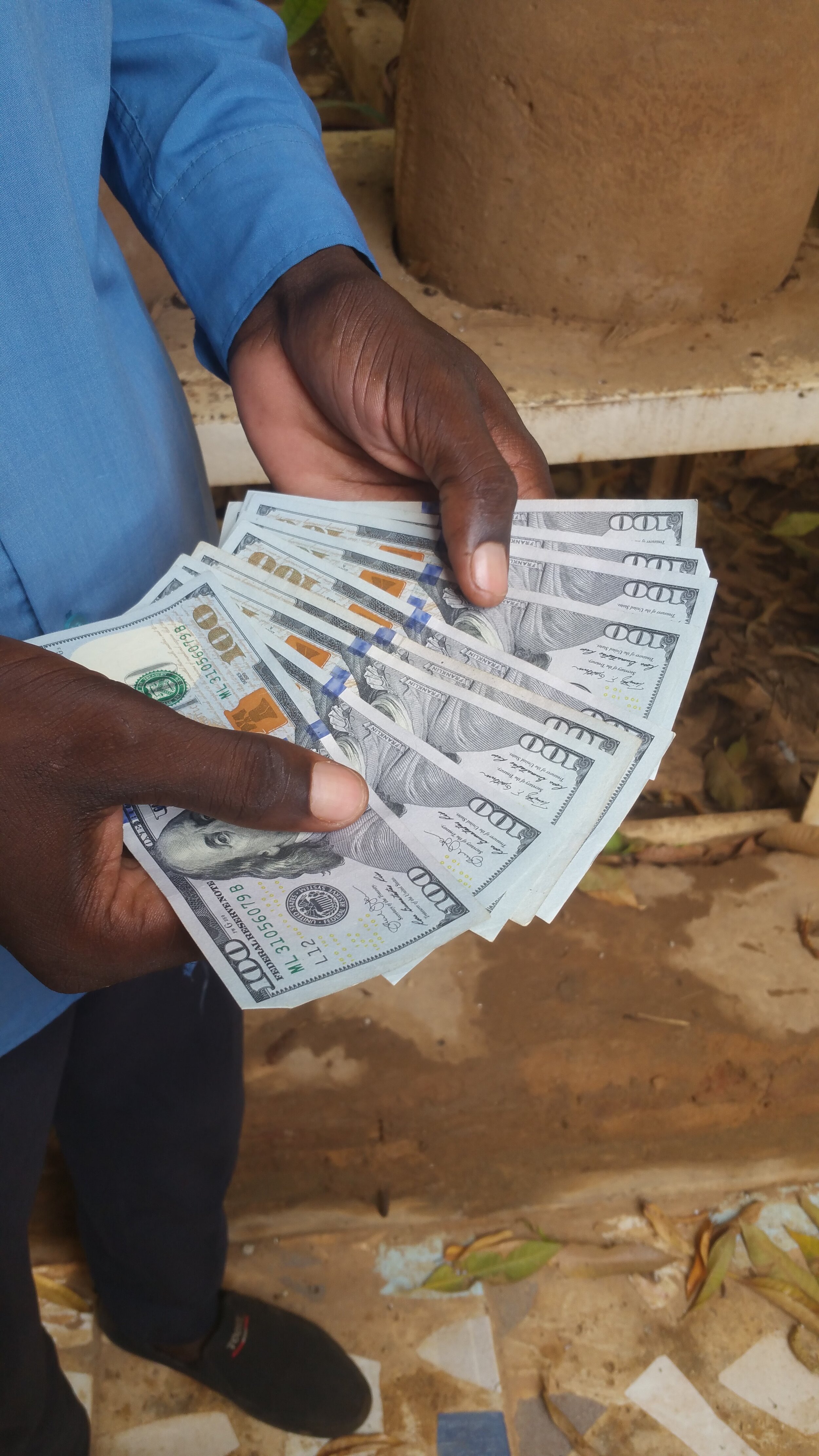
That was thirty years ago. KhairAllah now was eight children, from how many wives I do not know. I do know his current wife, who showed me her mod cons when I visited the house last time. Electric refrigerator, electric hot plate, electric air conditioner. Only now Umdurman has so many power cuts they don’t run often. Goatskins and clay pots keep water cool by sweating and evaporating. Fire wood sellers go house to house. Every compound in Dar al-Salam has thatch roof verandas for outside sleeping and sitting. I asked a wealthy Sudanese if he thought KhairAllah would benefit from an electric generator. How will he pay for the petrol? he asked. No, he answered, It would ruin him.

20200805_103726.jpg

Goodness gracious in dar al-kababish

…in the case of the Kababish, the government moved to improve on its traditional ways…no other tribe had so completely and with such success administered its own affairs, presenting few difficulties precisely because it was so primitive…

-Empire on the Nile: The Anglo-Egyptian Sudan, 1898-1934, M.W. Daly

Maybe not quite as primitive as the British Empire thought. Talal Asad wrote an almost impenetrable post-independence ethnography of the political pathways of Kababish power, authority, and consent, with organization charts so complex as to make the most ivory towered structural anthropologist’s head to swim. Nevertheless I didn’t find KhairAllah’s place within the Kababish confederation so hard to deconstruct. But then I never got more further details than his full name, KhairAllah Khair al-Sayyid KhairAllah, The Goodness of God Son of the Goodness of the Prophet Son of the Goodness of God.

Too much sand and sun in one movie?

It was in the Teatro del Lago in 1963 that I saw the film Lawrence of Arabia for the first time…According to my mother, I couldn’t stop talking about it for weeks. The harder I tried to make the story clear to her, the more I realized that a simple retelling was beside the point…she said, Who wants to see a movie with a lot of sand and sun anyway?

-Lawrence of Arabia: A Film’s Anthropology, Steven Caton

I will tell you who…KhairAllah, Bilal, Hamid, the other drovers gathered that night in the Cairo camel market for an outdoor projection in 1990 (see blog entry January 10, 2019), and all the villagers in Dar al-Kababish who saw the movie on my screening tour with KhairAllah in 2006. Not too much sand and sun for any of them, but a lot of familiar faces on screen and a lot of up country dialect they understood perfectly well that had gone right past the big city audiences in Cairo and Khartoum.

In the scene when Yusuf says what the BBC translated as, Why don’t you fall in a hole?, they laughed their heads off in Dar al-Kababish but sat in silence at the University of Khartoum. Yusuf himself might not have wanted to see it, because his behavior at the end of the film did not reflect well on him, but he was killed in a car crash not long after, whether returning from another camel drive to Egypt I do not know.

Nothin' in the sahraa'

Feisal (played by Alec Guinness in blackface): There’s nothing in the desert.

-Lawrence of Arabia, screenplay by Robert Bolt

You hear that a lot in Cairo, Wa laa haaga, And not a thing. Nothing. As in the answer to the question, What do you want, or What are you looking at? Wa laa haaga. As in, Mind your own business!, and you say, Okay. But that is city talk. On the trail, anyone’s business is everyone’s business. Feisal was wrong, there’s everything in the desert, where men discuss all of it.

Life, death, and falling into holes

After a long lonely wandering you meet a caravan and listen in the evening to the talk of the grave sunburned men around the campfire: they talk of the simple, great things of life and death…and you never hear idle babbling, for one cannot babble in the desert.

-The Road to Mecca, Muhammad Asad

Abdullah: Why don’t you saddle your camel? Yusuf: You’re the one who wants to saddle. Abdullah: Go saddle. Yusuf: Why don’t you fall in a hole?

-Voice of the Whip, Day 25, testy dialogue between drover and trail boss, with an expurgated translation of the last line

Muhammad Asad was the father of anthropologist Talal Asad who wrote an ethnography of the Kababish. If Talal had briefed his father about campfire conversation in the Sahara, as opposed to the Nafud, he would have known just how much they babbled in that desert at night. Perhaps I was at fault, but I acted in the spirit of linguistic curiosity.

I wanted to know the difference between a dhurta and a fuswa which the drovers discussed at length fireside. If I had my Lane handy I would have read, Dharata, v., Dhurta, n., [a course word signifying] He broke wind from his anus with a sound [when it is without sound you say fuswa], Hence the proverb, The ass had no power except breaking wind from his anus with a sound. But the drovers did not enlighten me about the verb in Form IV, Adhrata. As per Lane, He made him break wind from his anus with a sound, or its useful secondary meaning, He imitated to him with his mouth the action of breaking wind from his anus with a sound. Babbling, indeed.

Bedu food and drink

Tafas: Here, you may drink. One cup. Lawrence: You do not drink? Tafas: No. Lawrence: I’ll drink when you do. Tafas: I am Bedu…Tafas: Bedu food. Lawrence: Good. Tafas: More…Bedu!

-screenplay by Robert Bolt

Tafas drank Bedu water from a Harith well and died. Lawrence ate Bedu food with his left hand and lived. Among the Kababish, we khawajas didn’t worry about Bedu etiquette, nor they about ours. They hadn’t read our dinner table rule books by Emily Post or Tish Baldridge, which they, being illiterate, could not have read even if they had wanted. But they applauded us at their aseeda pot, eating with our fingers and drinking from the same pot after they’d wiped it half clean of millet crumbs and cooking oil. De Gustibus, no doubt.